
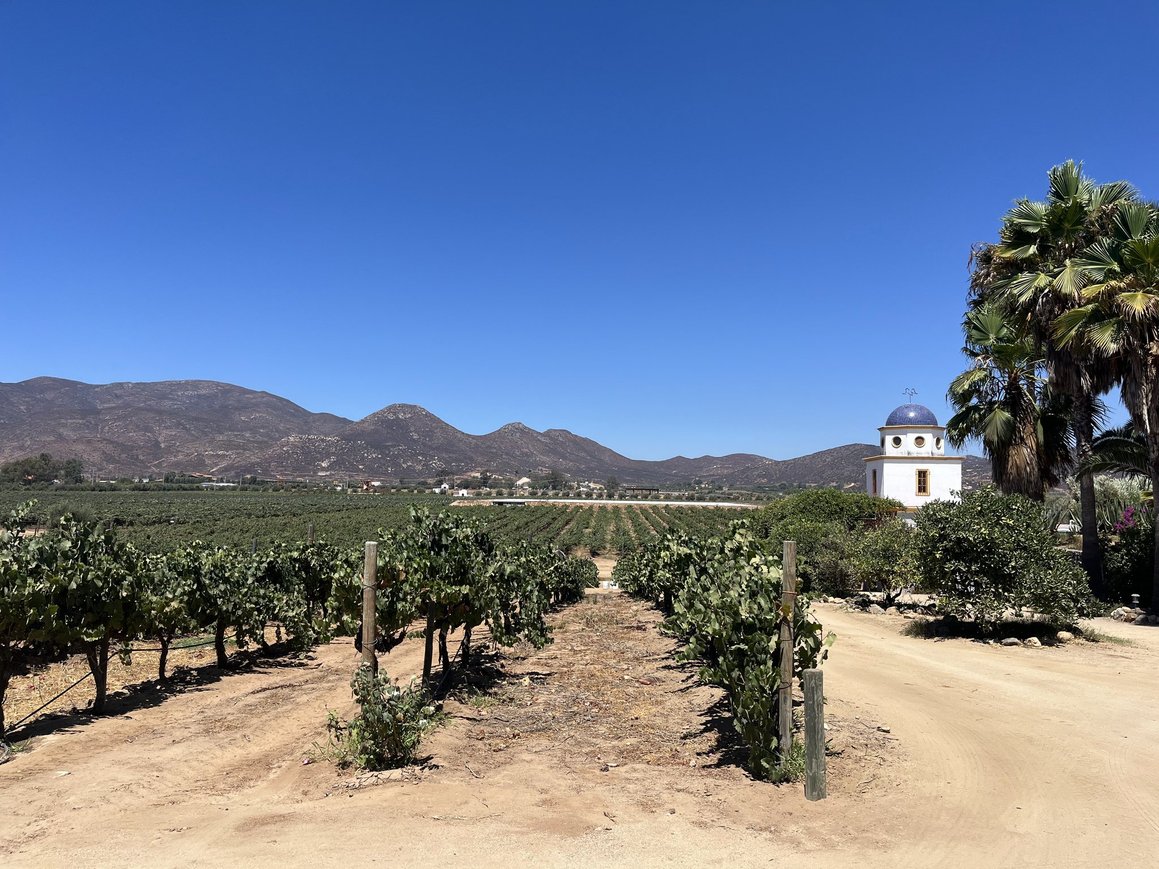
There is a valley in Baja California, about an hour south of the US border, where the road narrows and the landscape opens up. The Pacific is close enough to cool the nights. The soil is dry and full of rocks. It does not look like wine country at first glance.

But that is exactly what makes it interesting.
Valle de Guadalupe is not trying to be Bordeaux or Napa. It is not chasing a style or a score. It is doing something harder and more honest than that. It is figuring out what it is.
And right now, that process is producing some of the most alive wine you can find anywhere.
A place built by people who stayed
Wine did not come to this valley through centuries of tradition. It came through people who had nowhere else to go and decided to make something from what the land offered. Early settler families planted grapes because the soil was there and the climate was workable. Mexican winemakers who studied in Europe came home and chose Baja over somewhere easier.
That story lives in the wines. They are not polished in the way that erases personality. They are warm and direct and sometimes a little rough in exactly the right way.
Montefiori is a good example of what happens when that valley spirit meets a different kind of history. The winery has Italian roots, and you feel it. There is a European patience in how the wines are made, a structure that gives them more to say over time. It is a small, personal operation. The kind of place where the person pouring the wine is usually the person who made it.

Adobe Guadalupe tells a different story. The estate is one of the most recognized in the valley, with its architecture and horses and a sense that someone built this with real intention over a long period of time. The wines are serious without being heavy. A visit there feels like arriving somewhere rather than just passing through.

And then there are the small producers. On one visit, a grower handed over a glass without any introduction. No label, no context. Just a look that said try it first. The wine was rough in a way that felt honest. When he talked about it afterward, the pride in his voice had nothing to do with ratings. It came from the ground. From knowing what he had made and why it mattered.
That moment is Valle de Guadalupe in a single glass.
The table is part of it
The food culture here is not separate from the wine. It grows from the same soil.

Animalon sits on a working ranch inside the valley. The setting is open, the food is tied directly to the land around it, and the pace is unhurried in a way that is rare. Bruma takes the valley seriously as a culinary destination without losing the warmth that makes Baja feel like Baja. Primitivo is the kind of place where you sit down for one glass and stay for three because nobody is rushing you anywhere.

All three are worth your time. All three remind you that the best meals in wine country are the ones that do not try to be anywhere else.
What to drink
Tempranillo and Nebbiolo do well here, which surprises people who associate those grapes with Spain and Italy. Grenache has found a natural home in the warm, dry conditions. White wines, especially from Chardonnay and Sauvignon Blanc, benefit from the cool marine air coming off the Pacific and tend to be fresher than the climate suggests.
Look for the small producers when you can find them. Their wines sell out fast, and they carry something the larger operations sometimes lose. A directness. A sense that the person who grew the grapes is still very close to the bottle in your hand.
Why now
Valle de Guadalupe is at the right moment. Big enough to be taken seriously. Small enough to still feel personal. The winemakers are accessible. The prices are honest. The experience has not been packaged for tourists yet.
It rewards curiosity more than knowledge. You do not need to know anything about wine to have a meaningful visit. You just need to show up and pay attention.
That is what good wine travel always comes down to.
Wandervine is now on the App Store. Valle de Guadalupe is one of the regions you can explore, plan a trip to, and stamp in your passport. Download Wandervine and start where your next bottle takes you.
Want this trip built and booked for you? As a certified travel advisor, I can help.
Where will wine take you?
Leave a Reply